
How Long Does Shou Sugi Ban Last? Lifespan Factors
A well-specified charred timber facade lasts decades. How many depends on the species, the board quality, the finish, the climate, the wall build-up, the installation and whether it gets looked after.
Long-term performance includes appearance, serviceability and safety. A board can remain securely installed while its colour and charred texture develop naturally, with inspection helping distinguish visual weathering from conditions that require repair.
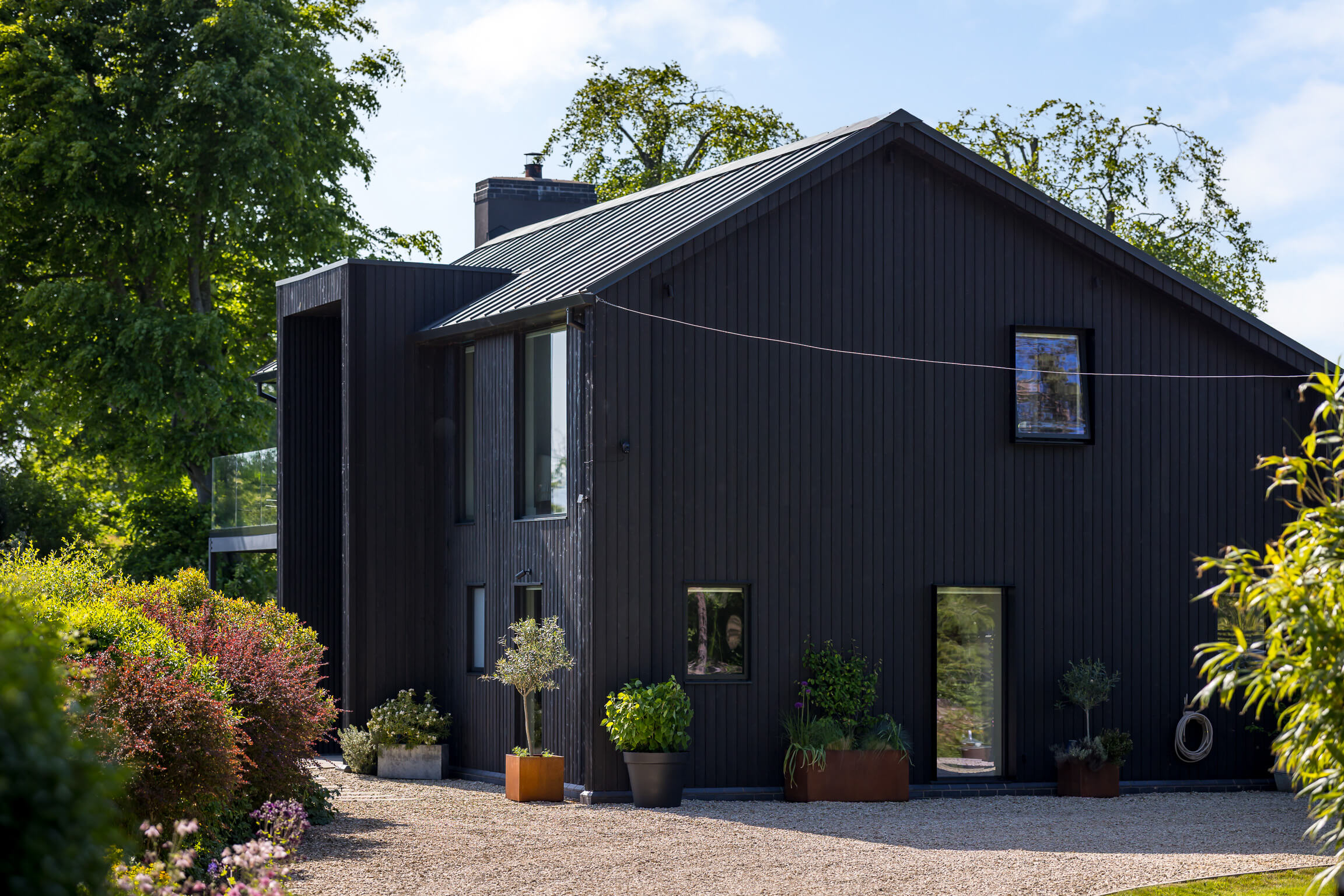
Why Service Life Is Project-Specific
Two buildings using the same product can age differently. A sheltered elevation with generous eaves may experience much less rain and ultraviolet exposure than a south- or west-facing wall in an open coastal location. Lower boards near paving can receive repeated splashback while upper boards remain relatively protected.
Installation quality adds another layer of variation. Correct drainage, ventilation, protected ends and well-designed junctions allow normal rain wetting to dry and support a longer useful life.
Appearance, Serviceability and Safety
Three different things are worth separating:
- Appearance: colour, sheen, charred texture and natural variation can change while the board remains functional.
- Serviceability: the cladding should stay secure, drain and ventilate correctly, and continue protecting the wall build-up as designed.
- Safety: fixings, boards and the supporting assembly must remain structurally sound and compliant with project requirements.
A client may choose maintenance because the colour has changed, even though replacement is not technically necessary. Conversely, a visually dark surface can hide moisture problems at the rear or ends.
Timber Species and Board Quality
Species differ in natural durability, density, dimensional movement, grain and response to moisture. Grade, sapwood proportion, knots, splits and machining also affect individual boards.
Charring changes the outer face, but the species underneath still governs how the board behaves. Matching species and grade to the exposure is what makes durability predictable rather than a gamble.
How the Charred Finish Influences Ageing
Deep Char creates a bold textured surface. It polishes, marks, sheds and erodes where it is touched or heavily exposed. A brushed finish exposes the grain. Where the finish is oiled, its colour depends more visibly on that oil; Natural and Dark Natural are left unoiled.
Degmeda boards pass through the controlled burning process using dedicated furnaces. Surface differences come from the species, natural grain, brushing and the coating system.
Every exterior finish changes with its environment. A sample shows you the starting point; ask us how the colour and texture are likely to move from there.
Moisture Management Supports Longevity
Charring improves resistance to moisture, weathering and biological activity. Protecting cut ends, joints, fixing penetrations, lower edges and concealed rear faces helps the complete board dry efficiently.
A ventilated rainscreen provides drainage and airflow. Flashings direct water away, clear cavity openings preserve ventilation, and suitable clearance from roofs, paving, soil and splash zones supports the coated visible face as part of a complete wall system.
Sun, Rain and Local Exposure
Ultraviolet light can change timber colour and break down exposed coatings. Wind-driven rain, freeze-thaw conditions, salt, pollution and biological growth may also influence ageing. The effect is rarely uniform across a building.
Check each elevation on its own rather than assuming they will all need work at the same time.
Installation and Handling
Store boards dry and protected, and install them with the specified profile, orientation and fixings. Dragging, stacking and rough handling damage Deep Char surfaces. Cut ends and local repairs need the approved treatment.
Substituting board dimensions, battens, membranes, oil or fixings changes moisture behaviour, appearance and any product classification. Check before you change anything on site.
How Maintenance Supports Service Life
Dealing with small defects early keeps the oil working and the drainage clear. There is no predetermined schedule: the finish, exposure and condition of each elevation decide the timing.
Maintenance may include gentle cleaning, clearing cavity openings, local coating repair, attention to joints or replacement of damaged boards. Using the compatible product system and testing appearance before a larger treatment supports consistent results.
What Should Be Inspected?
Inspect charred timber periodically and after severe weather, leaks or nearby building work. Check:
- lower edges, ends, corners and horizontal projections;
- areas below gutters, sills, balconies and roof junctions;
- blocked ventilation or drainage openings;
- loose boards, corroding or displaced fixings;
- cracks, impact damage and loss of charred texture;
- persistent dampness, softness, fungal growth or unusual staining;
- coating wear and colour differences between elevations.
Normal dirt or colour change is not automatically decay. Diagnose the cause before cleaning, coating or replacing material.
When Should a Board Be Repaired or Replaced?
Localised surface damage may be repairable when the timber remains sound and a compatible finish is available. Replacement may be more appropriate when a board is soft, decayed, badly split, insecure or cannot perform its intended function.
Correct the cause of damage first. Replacing a board without resolving a leak, trapped moisture or incorrect clearance can lead to the same failure again.
Replacement boards may initially differ from weathered material. Keeping the original order reference, product name, species, colour and coating makes future matching easier.
How to Plan for a Long Service Life
- Choose a species, grade, profile and finish suited to the application.
- Design the complete rainscreen, not only the visible board.
- Protect vulnerable ends and water-shedding details.
- Follow the specified installation and handling instructions.
- Record the product and coating system for future maintenance.
- Inspect by condition and exposure rather than using one fixed calendar interval.
- Repair moisture sources and local damage promptly.
How Long Will Degmeda Charred Timber Last?
Degmeda charred timber is specified for long-term performance by matching the product, species, finish and maintenance guidance to the building and local climate. The designer and installer then coordinate those choices within the complete façade system.
Send the project location, application, orientation and desired finish when requesting advice. Explore our charred wood products or read the detailed guide to Shou Sugi Ban durability.