
What Is the Best Wood for Outdoor Decks?
There is no single best wood for a deck. The right board is the one that matches your site, your structure, how much traffic it takes, how much maintenance you want and how you want it to look. The hardest species is not automatically the answer.
A deck is a demanding use for timber. Boards are horizontal, repeatedly wetted, exposed to sunlight and walked on. Water can remain at joints and fixings, while furniture, grit, pets and footwear create mechanical wear. If you are considering charred boards specifically, charred wood decking covers which finishes are supplied for a deck. Product selection and detailing therefore matter more than a broad label such as “hardwood,” “softwood,” “charred” or “Thermo Wood.”
For a practical overview of material selection, installation and long-term care, see Wood Decking Installation, Cleaning and Maintenance.
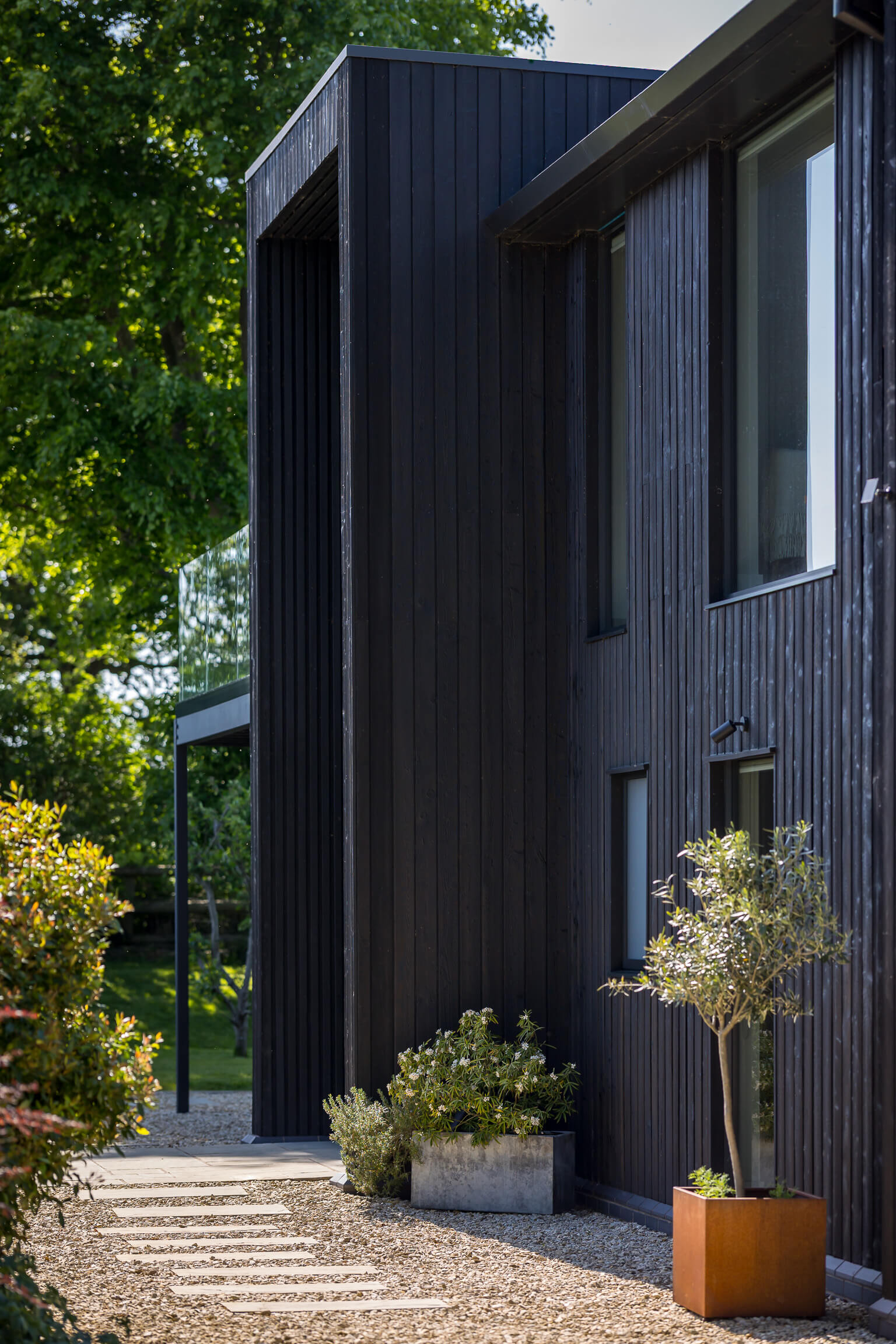
Charred larch cladding beside the Blackwood garden terrace — cladding, not a deck surface.
What Makes Timber Suitable for Decking?
Durability in the Intended Exposure
Durability describes resistance to biological deterioration under defined conditions; it does not mean the surface will remain visually unchanged or free from checking, wear and staining. Heartwood and sapwood from the same species may perform differently, and treatment or modification must suit the relevant use class.
Check whether the exact board is approved for exterior horizontal use, whether it can be used near or in ground contact, and how cut ends and drilled holes must be treated. The supporting structure needs its own durability specification.
Strength, Hardness and Surface Wear
Hardness affects denting and abrasion, while structural strength affects spans and loads. These are not the same property. A stable or biologically durable board can still be relatively soft, brittle or vulnerable to impact.
Busy hospitality terraces, entrances and areas where furniture is moved need a different surface from a lightly used private deck. Barefoot areas also require attention to splinters, raised grain, fastener heads and heat under strong sun.
Movement and Dimensional Stability
Timber expands and contracts as moisture changes. Species, board width, grain orientation, moisture content and modification affect this movement. Correct gaps, fixing positions and joist spacing allow boards to move without trapping water or creating unsafe edges.
Slip Risk
No wood species or finish is universally non-slip. Slip resistance changes with surface texture, direction of travel, wear, water, frost, algae, leaves, oils and cleaning history. A rough-looking board is not automatically safer.
Where slip performance is important, specify a suitable product and use project-relevant documented testing. Maintain drainage and remove biological growth before it creates a hazardous surface.
Maintenance Expectations
Decide whether you are happy for the deck to grey naturally or want to hold the original colour. Oil slows the colour change, and it means re-oiling from time to time. There is no predetermined schedule: exposure, traffic and surface condition decide when.
Outdoor Decking Timber Options
Accoya
Accoya is acetylated timber with high dimensional stability and strong biological durability. That stability reduces movement problems. It does not stop weathering, surface wear or the need for good detailing.
Use the approved decking grade, profile, fixing system and support spacing. Confirm coating compatibility and consider how scratches or worn traffic paths will be repaired.
Larch and Other Naturally Durable Softwoods
Larch has attractive grain and useful natural durability, especially when heartwood content and quality are specified properly. Performance varies with source, grade, sapwood content and exposure. Expect some movement, resin, checking and splintering.
Other softwoods work when the species, treatment and grade are made for decking. Look past the initial price: sorting, waste, maintenance and replacement decide what the deck actually costs over its life.
Pressure-Treated Timber
Pressure treatment introduces preservative into timber to improve resistance to biological decay. Modern formulations and regulations vary by market, so old claims about all treated wood containing arsenic are misleading. Request documentation for the actual preservative, treatment penetration, retention and intended use class.
Pressure-treated timber is not automatically waterproof or fire-resistant. Use compatible corrosion-resistant fasteners, follow instructions for cut ends and machining, and observe handling and disposal guidance from the supplier.
Thermo Wood
Thermal modification improves dimensional stability and biological durability compared with untreated timber of the same species. It also reduces some mechanical properties and leaves the surface more vulnerable to wear, dents and impact.
Thermo Wood suits some decks, provided the product is approved for it and the traffic, support spacing, fixings and exposure match. For heavy traffic, a harder board will serve you better.
Hardwoods
Many hardwoods are selected for density, wear resistance and natural durability, but the category is too broad to guarantee performance. Species, origin, drying quality, grain, extractives and legal sourcing all require review. Dense timbers may need pre-drilling and specific fasteners, and some can stain adjacent materials through runoff.
Can Charred Wood Be Used for Decking?
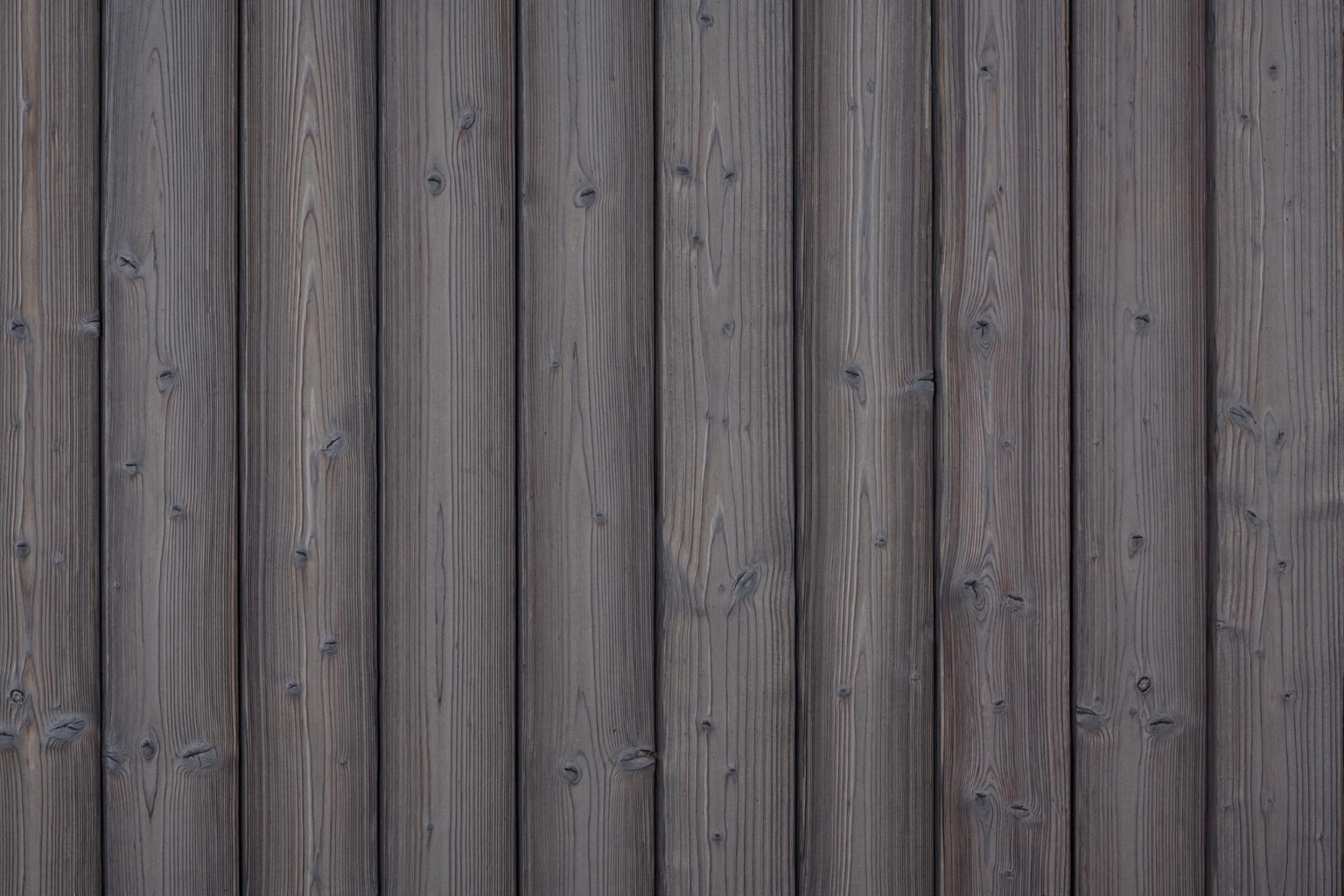
Light Grey brushed charred spruce, shown as a product surface rather than an installed deck.
Degmeda supplies brushed and oiled charred boards for decking, and Deep Char is not suitable for a walked surface. Charring improves the surface’s resistance to moisture, weathering and decay. Beyond that, what matters is a board and profile designed for foot traffic, drainage, grip and structural loading.
Colour and texture also change in use. Traffic paths can become smoother or lighter than sheltered areas, furniture can mark the coating, and exposed boards can weather differently from boards beneath a roof. These are normal design and maintenance considerations rather than automatic product defects.
Deck Design Matters as Much as the Board
Drainage and Ventilation
Provide a sound, durable substructure with clear drainage and airflow. Avoid details that hold water against board ends, joists, walls or metalwork. Gaps must suit the timber’s installed moisture content and expected movement while remaining safe for the intended users.
Fixings and Metals
Use the specified fixing material and geometry. Stainless steel may be required for particular timber, treatment or coastal exposure. Extractives and treatments can react with unsuitable metals, causing corrosion and dark staining.
Board Orientation and Replaceability
Plan board direction, joints and access so damaged pieces can be replaced without dismantling large areas. Coordinate steps, thresholds, drainage outlets, hatches, balustrade posts and transitions before installation.
Layout Ideas for Compact Gardens
In a small garden, a simple deck level and a limited material palette usually create the clearest result. Board direction can visually lengthen or widen the space, while a perimeter board, restrained colour contrast or integrated seating can define zones without adding barriers.
Keep planting, planters and furniture clear of drainage routes and inspection points. Built-in seating should allow airflow and access below, and changes in level must remain easy to see and use safely. The layout should preserve practical circulation between doors, seating and the garden rather than covering every available metre.
Pools, Saunas and Coastal Areas
These environments need additional assessment. Constant wetting, chemicals, salt, barefoot use and higher slip risk affect the choice of species, finish and fixings. Do not assume a product suitable for a private garden deck is automatically suitable beside a pool or in commercial hospitality use.
How to Maintain a Timber Deck
Inspect the deck regularly and after severe weather. Look for trapped debris, blocked drainage, loose boards, raised fasteners, coating wear, splinters, movement, decay and corrosion. Correct moisture sources and structural defects before cosmetic work.
Remove loose dirt with methods approved for the exact finish. Avoid treating high-pressure washing as a default: it can erode fibres, remove coating, raise grain and force water into joints. Use compatible cleaners, test a discreet area and allow the deck to dry before judging colour or planning recoating.
Recoat when the specified system shows wear and the surface has been prepared according to its instructions. There is no reliable universal rule such as annual sealing or oiling every 10–15 years for every timber deck.
How Degmeda Helps Select a Decking Product
For a useful recommendation, provide the project location, deck dimensions, private or commercial use, expected traffic, proximity to water, substructure, desired colour, acceptable weathering, maintenance expectations and relevant slip or fire requirements.
Degmeda can then discuss suitable charred wood options and, where appropriate, selected Thermo Wood products without presenting one material as the answer to every deck. Samples should be reviewed outdoors and approved together with the species, profile, surface treatment and coating.
So, What Is the Best Wood for an Outdoor Deck?
The best choice is the one whose documented durability, mechanical performance, finish and installation system match the real project. Accoya, larch, treated timber, hardwoods, selected Thermo Wood and charred decking can all be valid in the right circumstances, but none is universally superior.
A durable deck comes from honest product selection, good drainage, appropriate fixings, careful installation and realistic maintenance—not from claims that any timber is waterproof, fireproof or guaranteed to last a century.