
Is Charred Wood Water Resistant?
Yes. Charring reduces how much moisture the wood absorbs, while oil provides additional protection against rain and other weather conditions. A charred wood facade can withstand rain and dry between periods of exposure.
However, charred wood is not completely waterproof. The boards themselves resist moisture, while a correctly installed and ventilated facade prevents water from accumulating behind them.
How Charred Wood Handles Rain
Oiled charred wood boards withstand normal rainfall and dry once the rain stops. Water is most likely to enter through cut ends, joints and fixing points. Cut ends are the part you can do something about: oil every fresh cut carefully before the board goes up.
A facade’s resistance to rain depends on more than charring alone. The wood species, board profile, oiling, quality of board preparation and correct facade installation all play a part.
How the Façade Manages Moisture
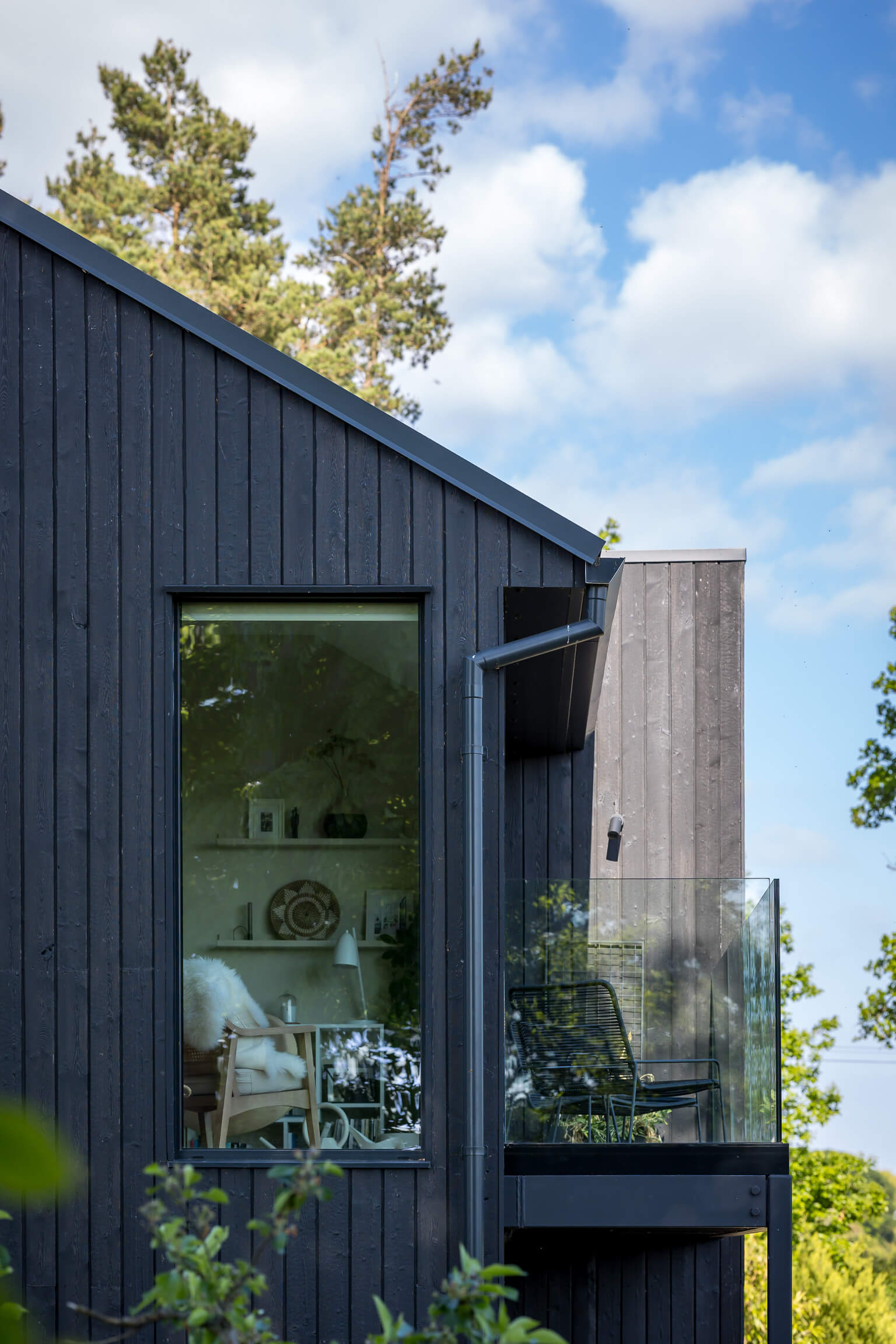
The wall behind the boards does much of the work. A ventilated gap lets air move behind the cladding so it can dry. A membrane and flashings send water back out. Keeping the boards clear of the ground and of flat surfaces stops water sitting against them.
Use suitable stainless steel fixings, and follow the spacing and edge distances in the current product and installation guidance. These small details matter as much as the boards themselves.
Some places are harder on timber than others: close to the ground, where rain splashes up, under roof run-off, or in shaded corners that never quite dry. Tell us about these before you order and we will suggest the right product and detailing.
Appearance and Performance Over Time
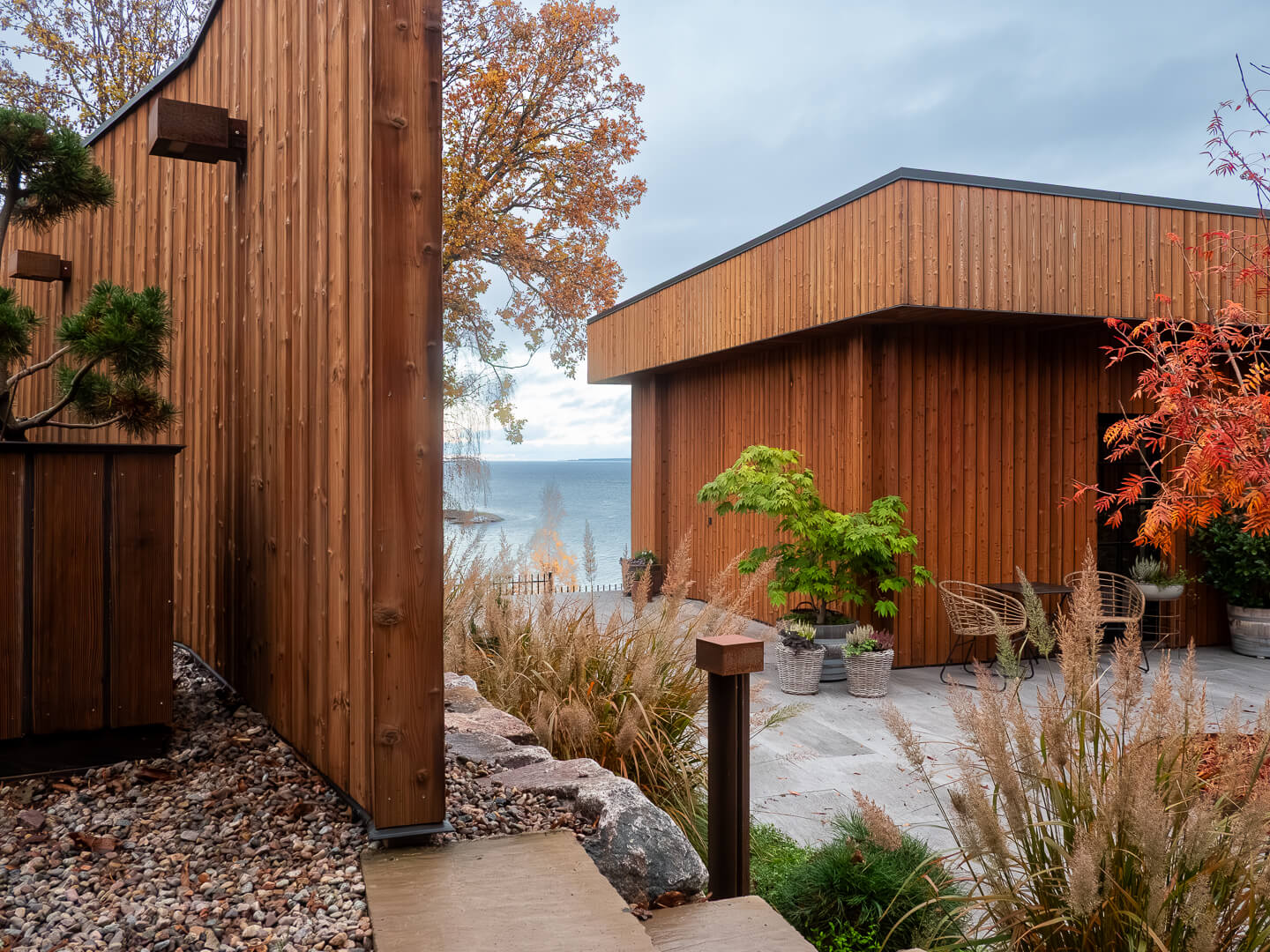
All outdoor timber changes with sun and rain. The colour softens and fades, and it happens unevenly, because one side of a building always gets more sun or rain than another. Textured surfaces also lose a few loose particles over time. This is normal ageing, not a fault, and no two buildings age at the same speed.
Oil holds the colour longer and slows down how much moisture the surface takes in. Dark colours, strong sun, sea air and flat surfaces all age faster, so those are the places to watch. If the final look matters to you, order a sample first.
Cleaning and Maintenance
Have a look at the facade after a storm or an unusually wet spell. You are checking for joints that have opened, worn oil, bare cut ends, loose screws, trapped leaves or dirt, and any spot that stays damp.
A soft brush or a gentle rinse removes loose dirt. Ask us before using anything stronger, because the right method depends on your finish. If you need to repair or re-oil a section, use the same product as the original so the colour stays even and the wood carries on breathing as it should.
Specify the Complete Degmeda Product
Before ordering, decide where the wood is going, which species, which profile and size, which char texture and colour, and how the wall behind it is built. If a project requires a declared fire classification or another regulated performance, request documentation for the exact product and assembly being supplied.
Degmeda can help match the charred-wood finish and technical specification to the project conditions. For the wider performance context, read how Shou Sugi Ban durability is assessed and how persistent moisture can create decay risk.