
Shou Sugi Ban or Yakisugi: What Is the Difference?
Yakisugi and Shou Sugi Ban are often used as names for charred timber, but they are not perfectly interchangeable. Yakisugi is the Japanese term connected with the traditional charring of sugi boards. Shou Sugi Ban is the name that became widely recognised outside Japan and is now commonly used for a broader range of charred-wood products. Two further names come up often: yakiita and carbonised wood.
Understanding the distinction helps architects, installers and property owners describe a product accurately. It also prevents a name from being mistaken for a performance guarantee. Species, board quality, manufacturing control, surface finish, coating, detailing and exposure all matter more than the label alone.

What Does Yakisugi Mean?
Yakisugi is written with Japanese characters associated with burning or heat treatment and sugi. Sugi is Cryptomeria japonica, a conifer native to Japan that is often called Japanese cedar in English, although it is not a true cedar.
In its traditional context, Yakisugi describes sugi boards whose faces are charred to create a carbonised surface. The historic process, local material and Japanese building tradition are all part of the term. This is why many specialists reserve Yakisugi for work made with sugi rather than applying it to every timber species that has been exposed to fire.
Why Is Shou Sugi Ban Used Outside Japan?
Shou Sugi Ban is the best-known international name for the appearance and idea of charred timber. It is widely used by architects, designers, manufacturers and customers across Europe and North America. However, it is not the standard Japanese name for the traditional material.
Rather than presenting one disputed story about how the Western expression developed, it is more accurate to treat Shou Sugi Ban as an established international industry term. In everyday English it usually describes timber deliberately charred and then finished for architectural use.
The spelling also varies. You may see Shou Sugi Ban, Shō Sugi Ban or Sho Sugi Ban. These variations generally refer to the same international category, not to different production methods or performance levels.
Are Yakisugi and Shou Sugi Ban the Same?
They overlap, but the scope is different:
- Yakisugi refers most precisely to the Japanese tradition of charring sugi boards.
- Shou Sugi Ban is the widely recognised international term for architectural charred timber and may include other species, finishes and controlled manufacturing methods.
- Charred timber is the clearest neutral description when discussing the broader product category.
A European charred spruce or larch board can be inspired by the same principle without being identical to traditional Japanese Yakisugi. Being precise about that difference respects the origin of the technique and helps customers understand what they are actually specifying.
How Degmeda Uses These Terms
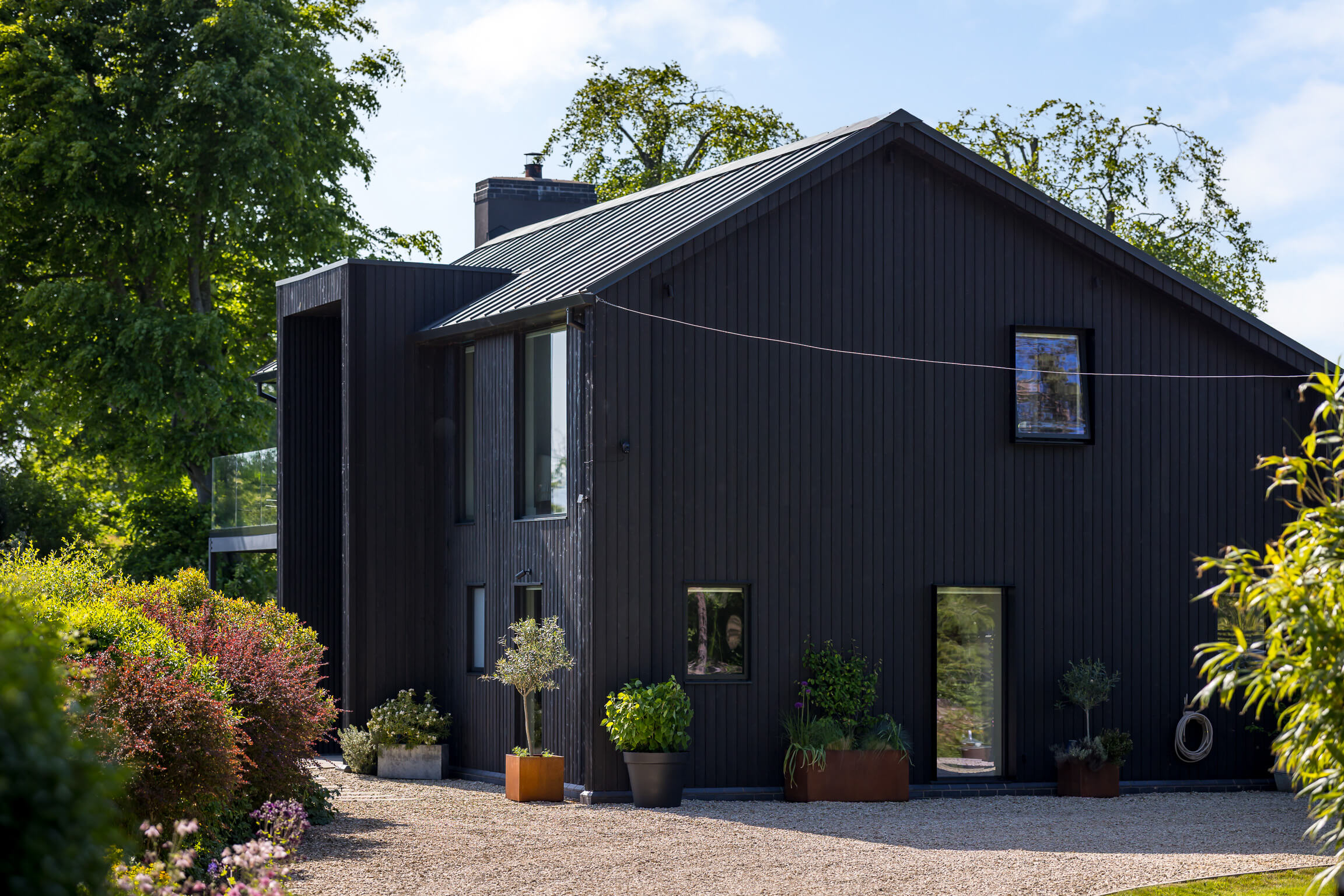
Degmeda manufactures architectural charred timber in Lithuania through a controlled burning process using dedicated furnaces. The visible result is influenced by the timber species, natural grain, brushing and the chosen oil, coating or colour treatment.
For international customers, Shou Sugi Ban is useful because it is the term many people search for and recognise. In technical discussions, we also use charred timber because it accurately covers products made from timber species such as spruce, larch and Thermo Pinus Radiata, together with modified-wood products such as Accoya®.
We do not suggest that every Degmeda product is traditional Yakisugi. The production setting, timber options and finishing systems are different. The connection lies in the controlled use of heat to transform the timber surface for architectural effect and service.
Does the Name Determine Performance?
The name alone does not determine performance. Controlled charring transforms the outer surface and improves resistance to moisture uptake, weathering and biological decay. The finished result also depends on the selected species, product system, façade design and installation. Any required fire classification must relate to the exact tested or classified product and assembly.
Long-term performance is affected by timber species and grade, moisture management, ventilation behind cladding, end-grain protection, fixings, orientation, exposure to sun and rain, and the condition of any coating. A protected façade may age very differently from an exposed elevation even when both use the same product.
The surface and colour develop over time in response to weathering, handling and contact. Deep Char, brushed and coated finishes each create a different surface character and maintenance approach. These are specification questions that cannot be understood from terminology alone.
What Should You Ask Before Choosing Charred Timber?
Instead of relying on a product name, ask the supplier for information relevant to the project:
- Which timber species and quality grade are being supplied?
- Is the finish Deep Char, brushed or otherwise textured?
- Which coating or finishing system is used?
- Is the product intended for exterior cladding, interior use, fencing or another application?
- What installation, handling and maintenance guidance applies?
- Which tested classifications or declarations cover the exact product build-up?
These answers give a much stronger basis for comparison than a label on its own.
Which Term Should You Use?
Use Yakisugi when referring specifically to the Japanese tradition and sugi material. Use Shou Sugi Ban when speaking in the familiar international language of charred architectural timber. Use charred timber when the species, production method or technical scope needs to be especially clear.
For a Degmeda project, the best approach is to start with the intended application, desired surface and exposure conditions. We can then help identify a suitable species, finish and product configuration rather than treating the terminology as the specification.

Explore Degmeda’s charred wood products or read our guide to what Shou Sugi Ban is for more practical information.