
Carbonized Wood: The Ancient Art of Shou Sugi Ban
Charring timber to protect and finish it is an old Japanese practice. Yakisugi is the Japanese term, connected with the traditional charring of sugi boards, while Shou Sugi Ban is the name that became widely recognised outside Japan and now covers a broader range of charred-wood products. If the naming is what brought you here, Shou Sugi Ban or Yakisugi sets out the distinction properly.
Carbonised wood describes the same thing in another word. The surface of the board is burned under control, which changes how it looks and how it behaves, and everything after that is a question of how far that surface is worked back. What Is Shou Sugi Ban is the fuller introduction; this page stays with the process and the material.
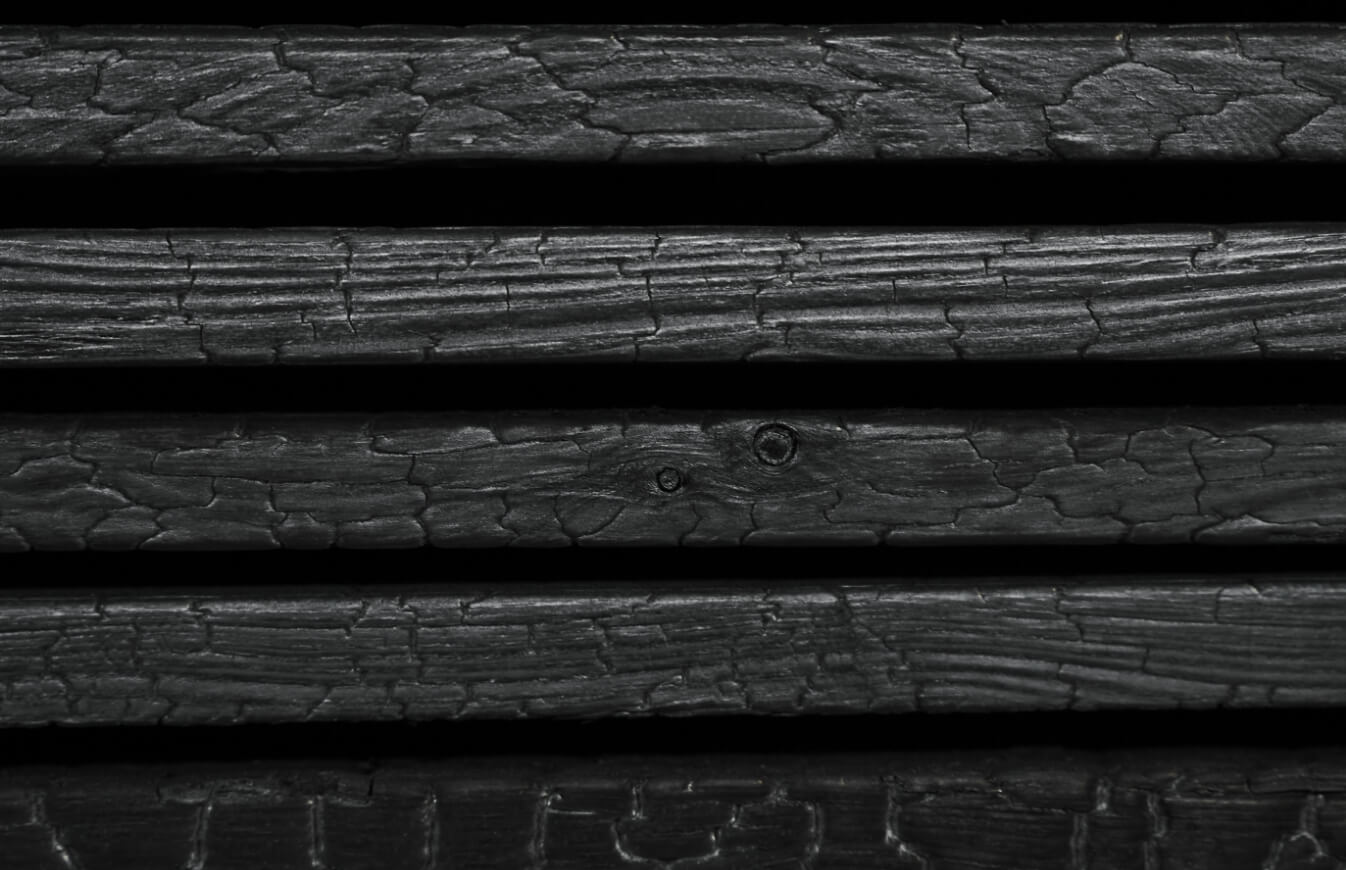
One technique, several timbers
Traditional Yakisugi used sugi (Cryptomeria japonica), often called Japanese cedar in English although it is not a true cedar. The technique is not limited to that species, and Degmeda’s charred families are Charred Spruce, Charred Larch, Charred Thermo Pinus Radiata and Charred Accoya®, with availability confirmed per order. Best wood types covers what each species brings and where modified timbers differ from natural ones.
Charring works on the surface. Every board leaves the furnaces as Deep Char, and from there it either keeps that carbon layer and is oiled, or it is brushed back to expose the grain, with the oil applied afterwards deciding the final product; Natural and Dark Natural are left unoiled. The manufacturing page follows a board through inspection, burning, brushing, oiling and packing, and the styles guide shows what each surface looks like once it is finished.
One thing is worth correcting early, because it appears almost everywhere this material is written about: the fire does not produce the colour. Charring blackens the surface and builds carbon, and the tone you end up with comes from the timber, the depth of the brushing and the oil. The colour guide explains what to compare when you are choosing one.
Tell us the application, the exposure and the wall or deck build-up behind the boards, and we will confirm which products we supply for it.


